



The mahseer question: Saving a fish, saving the river
Mahseer, once rulers of fast-flowing rivers, are vanishing in Bangladesh due to habitat loss, neglect, and short-term human choices. Yet the real tragedy is not just their disappearance, but that we no longer recognise what a river should look like when it is whole

I stood still beside a shallow forest pool, my path ahead blocked by ancient boulders, worn smooth by centuries of flowing water. The stream threaded quietly through the rocks, its surface broken only by ripples of light filtering down from the canopy above. I hesitated, already tired from a long morning hike to set camera traps deep within the forest, weighing whether to risk climbing over the slick stones.
Instead, I paused and looked down.
Darting between submerged rocks and resting in calm eddies, fish moved in and out of view — some small and silver, others banded in copper and black. Their scales shimmered like moving brushstrokes, catching the light as they slipped effortlessly through the current. They moved with a confidence that spoke of long familiarity with fast water and stone.
Among them was something different. Larger, heavier. A presence that seemed to anchor the pool itself.
 Keep updated, follow The Business Standard's Google news channel
This was a mahseer — Stevenson's mahseer, an as-yet undescribed species known from the hill streams of Bangladesh. In that quiet moment, it felt clear that this pool was not just water. It was a living archive, carrying fragments of an evolutionary story that predates our maps, our dams, and our forgetting.
The king of fast waters
Mahseers are not merely fish. Across South and Southeast Asia, they have long stood as symbols of strength, endurance, and abundance — creatures shaped by current and stone. Built for power rather than speed, their muscular bodies, oversized scales, and deeply forked tails allow them to hold position in fast-flowing rivers where few others can persist.

For centuries, mahseers dominated Himalayan and sub-Himalayan river systems, migrating vast distances, spawning in clean gravel beds, and structuring freshwater food webs as apex omnivores. Their presence signalled rivers that still flowed freely.
Early naturalists and hunters were captivated by them. Jim Corbett, better known for his writings on tigers and forests, frequently wrote of mahseers with equal admiration — describing their intelligence, stamina, and near-mythic ability to test both angler and river alike. In his accounts, mahseers were not trophies but worthy adversaries, emblematic of untamed waters.
Bangladesh lacks such a unifying vision. Fisheries management often focuses on yield. River engineering focuses on control. Conservation is left reacting to crises, not anticipating them. Mahseer falls through these gaps — too wild for aquaculture, too invisible for policy.
Yet this reverence concealed a deeper vulnerability. A fish so finely tuned to free-flowing rivers can endure only as long as the rivers themselves remain unbroken.
The mahseers of Bangladesh
Bangladesh lies at the downstream edge of the Himalayan river system, yet its eastern and northeastern hill streams — particularly in the Chittagong Hill Tracts, Sylhet, and Cox's Bazar — once supported remarkable mahseer diversity. These fast-flowing, oxygen-rich rivers, draining the hills of Bangladesh and adjoining Meghalaya, Tripura, and Mizoram, formed natural corridors between breeding and feeding grounds.
Confirmed and suspected mahseers from Bangladesh include the red-fin mahseer (Tor tor), golden mahseer (Tor putitora), Tor barakae, several Neolissochilus species — such as the chocolate mahseer (Neolissochilus hexagonolepis) — and now Stevenson's mahseer, (Neolissochilus stevensonii) an as-yet undescribed species known only from remote forest streams.
Unlike their better-documented counterparts in India and Nepal, Bangladeshi mahseers remain poorly studied. Many persist in isolated hill streams, retreating to deep pools beneath boulders and roots during the dry season and riding monsoon floods upstream to spawn. Their populations are fragmented, declining, and often known only to local fishers.
The irony is stark. Bangladesh, a nation defined by rivers, has allowed some of its most iconic freshwater giants to fade quietly from collective memory. Today, mahseers — when they appear at all — surface as smaller, duller fish in local markets, stripped of both size and legend.
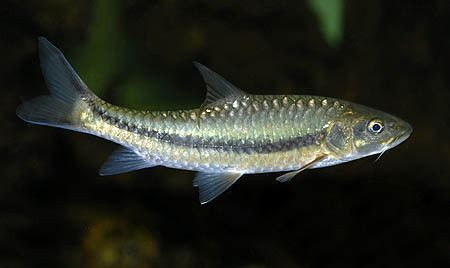
Across Asia, scientists recognise roughly 50–60 mahseer species and forms. How many of them still survive in Bangladesh, however, remains an unanswered question — one shaped not by mystery, but by neglect.
The broken rhythm of rivers
Mahseer are migratory fish. Their lives depend on seasonal movement — upstream to spawn, downstream to grow. This rhythm is fragile. A single dam, sluice gate, or poorly planned embankment can break it.
Across the region, dams have turned rapids into reservoirs, flattened river gradients, and blocked access to breeding grounds. In Bangladesh's hill tracts, rivers face a different threat: fragmentation by roads, unregulated extraction, and destructive fishing practices.
Dynamite fishing remains one of the most devastating. A single blast kills everything within reach — juveniles, brood fish, insects, and eggs alike. It does not merely harvest fish; it erases future generations.
For a species like mahseer, which matures slowly and relies on large, experienced breeders, such losses are catastrophic.
Attempt to bring back the mahseer
There are success stories — partial, fragile, but real. In Bangladesh, research institutions have achieved induced breeding of mahseer under controlled conditions. Hatcheries have produced fry, proving that reproduction is possible with the right knowledge and investment.
These efforts matter. They show that extinction is not inevitable.
But captive breeding alone cannot save mahseer. Releasing fingerlings into degraded rivers without restoring habitat is like releasing birds into a forest without trees. Without flowing water, gravel beds, shade, and uninterrupted migration routes, hatchery-raised mahseer have nowhere to become kings.
Rivers without guardians
Elsewhere in South Asia, organisations like the 'Mahseer Trust' have worked to reframe conservation. Rather than treating mahseer only as sport fish or food fish, they promote them as flagship species — icons that can rally protection for entire river systems.

Where mahseer thrive, rivers remain clean. Where they vanish, something fundamental has broken.
Bangladesh lacks such a unifying vision. Fisheries management often focuses on yield. River engineering focuses on control. Conservation is left reacting to crises, not anticipating them. Mahseer falls through these gaps — too wild for aquaculture, too invisible for policy.
A fading inheritance
Older fishers still remember rivers where mahseer were once common, where certain pools were avoided out of respect, and where dynamite was unthinkable. That cultural memory is fading fast.
What remains are fragments — occasional catches, scientific papers, hatchery trials, and fading photographs. We speak of restoration as if it were solely a technical challenge, forgetting that it is also a moral one.
Mahseer did not vanish overnight. They disappeared as we chose convenience over continuity, extraction over restraint, the present over the future.
Learning too late
Mahseer teaches us something uncomfortable — not all losses are sudden. Some unfold quietly, season by season, until a river forgets what it once carried.
We often celebrate conservation only when numbers rebound, when success is measurable and photogenic. But species like mahseer ask a harder question: why do we rarely act until collapse becomes inevitable?
Perhaps the real tragedy is not that mahseer are disappearing, but that we no longer recognise what a river should look like when it is whole.
If we cannot imagine that future — fast water flashing gold under morning light — then no number of hatcheries or headlines will bring these fish back to rule our rivers again.


