



Unilever Bangladesh wiring climate responsibility into operations
From industrial energy systems to workplace behaviour, the company is testing whether sustainability can become operational rather than symbolic.

As climate vulnerability increasingly dictates the future of global manufacturing, Unilever Bangladesh is turning environmental rhetoric into daily industrial discipline.
From the high-stakes factory floors of Kalurghat to its LEED Gold-certified corporate headquarters in Dhaka, the consumer goods giant is testing whether sweeping sustainability goals can be successfully hardwired into everyday operations and workplace behaviour without compromising scale.
In Kalurghat, the climate question inside the factory
 Keep updated, follow The Business Standard's Google news channel
Just after sunrise at Unilever Bangladesh's Kalurghat factory in Chattogram, engineers begin reviewing a different kind of production data. Alongside manufacturing output and operational targets, digital systems monitor water flow, energy use, and waste movement across the sprawling industrial complex on the western bank of the Karnaphuli River.

In a country increasingly defined by climate vulnerability, those numbers carry unusual weight.
Bangladesh's industrial growth has long depended on factories like this one.
Established in 1964, the Kalurghat facility became part of the economic identity of newly independent Bangladesh after the government acquired a 39.25% ownership stake in Unilever Bangladesh in 1973. Today, the company's products reach 9 out of 10 Bangladeshi households, a scale that brings both commercial influence and environmental consequence.
Now, more than six decades after production first began there, the factory is attempting something more difficult than manufacturing consumer goods at scale: proving that a large industrial operation in one of the world's most climate-exposed countries can reduce its environmental footprint in measurable ways without slowing down its production.
The effort comes at a moment when Bangladesh faces mounting environmental strain.
Rising temperatures, water scarcity, erratic weather patterns, and persistent energy instability are reshaping how industries think about long-term survival.
For large manufacturers, sustainability is becoming tied to operational resilience.
At Kalurghat, that shift has unfolded gradually rather than dramatically.
Since adopting an internal environmental baseline in 2010, the factory has reduced energy consumption by 31%, saving roughly 1.61 million gigajoules of energy.
Carbon emissions have fallen by 32%, preventing nearly 90,560 tonnes of carbon dioxide emissions. Water use has declined by 33%, equivalent to approximately 2.8 billion litres saved, while waste generation has dropped by 30%.
Inside Bangladesh's industrial sector, where sustainability systems continue to evolve and infrastructure limitations remain a persistent challenge, such reductions are significant not only because they exist, but because they are tracked continuously.
Environmental data at the factory undergoes independent monthly data integrity audits.
Teams from engineering, operations, and finance jointly review sustainability performance. Water mapping systems monitor where water enters the facility, how it moves, and where it is discharged. Environmental performance is discussed with the same seriousness as production efficiency and operational cost.
The transformation itself has been shaped less by headline-grabbing technologies than by hundreds of smaller operational decisions.
Factory engineers spent years identifying where energy was being wasted, where systems could be modernised, and where consumption could be reduced altogether.
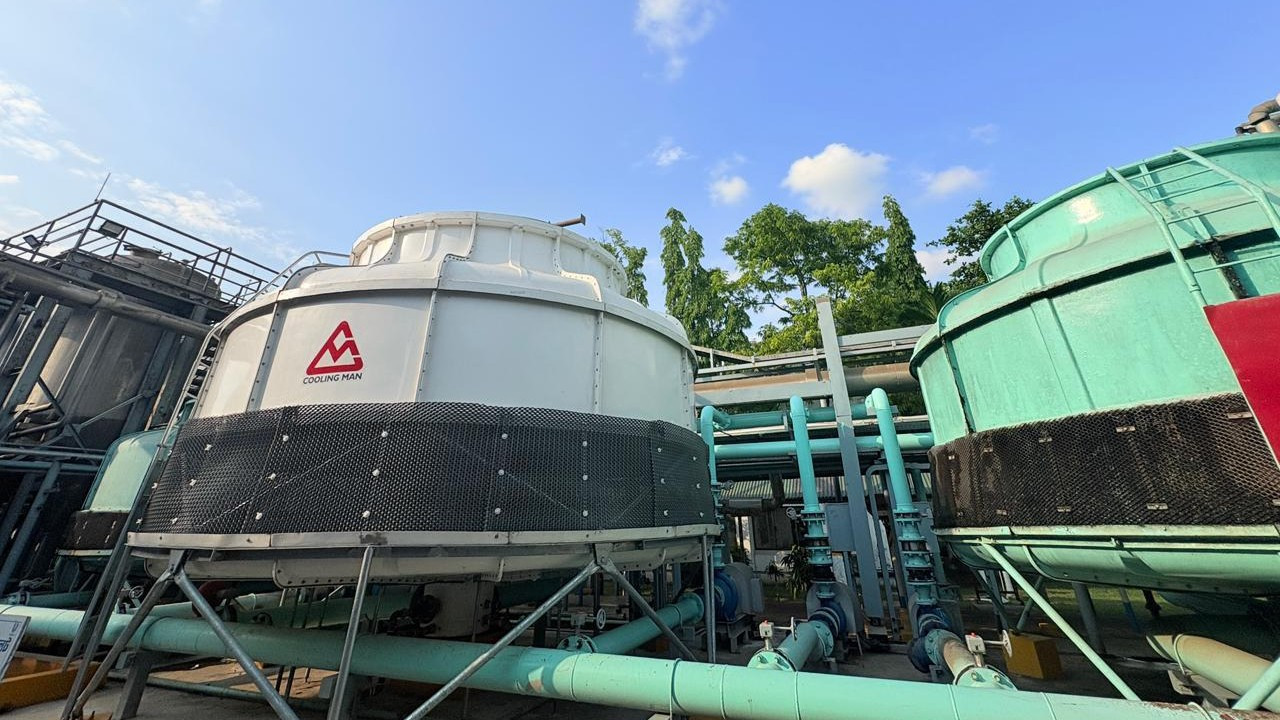
Vacuum systems were upgraded. Cooling technologies were redesigned. Heat recovery systems were introduced to reduce unnecessary energy loss. Condensate recovery systems were expanded. Rainwater harvesting capacity was strengthened. A recirculating cooling loop significantly reduced annual water discharge.
The factory has also maintained zero waste to landfill since 2014. Some residual waste is now redirected to cement factories, where it is used as alternative fuel in place of conventional fossil fuels. Packaging materials and chemical containers are sent back through recycling systems as part of a broader effort to reduce waste leakage.
Electricity presents one of the most difficult challenges.
Bangladesh's power grid remains under pressure from rapid urbanisation, industrial demand, and climate-related disruptions.
Since 2021, the Kalurghat facility has operated under a verified and auditable framework recognising 100% renewable electricity usage through renewable energy certification mechanisms for the grid consumption.
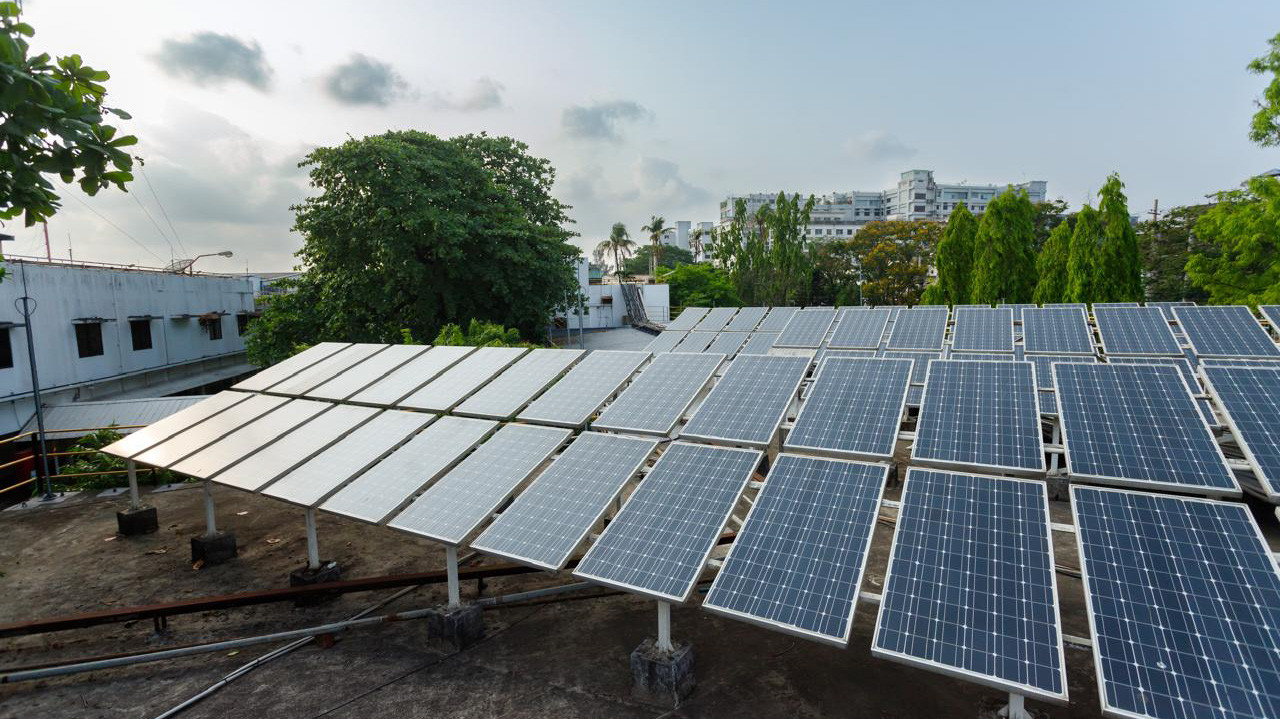
At the same time, rooftop solar installations have been expanded to 890 kilowatt peak and further enhancement is planned.
While sustainability challenges continue to evolve globally for large consumer goods manufacturers, companies are increasingly exploring ways to reduce environmental impact across operations, packaging, and supply chains.
At Kalurghat, the focus has been on making environmental responsibility more measurable, operational, and integrated into everyday decision-making rather than treating it as a standalone initiative.
In Bangladesh, that distinction matters.
Reducing water use by one-third inside a major industrial facility is not a cosmetic achievement in a country already confronting groundwater stress and growing water insecurity.
Maintaining long-term carbon reductions in a climate-vulnerable economy is not operationally simple. And embedding environmental monitoring into routine factory governance requires a level of institutional discipline still relatively uncommon across much of South Asia's industrial landscape.
Unilever acknowledges that factory-level interventions alone will not solve Bangladesh's broader climate challenges. Long-term progress will still depend on public infrastructure, stronger environmental regulation, and international climate cooperation.
Still, the Kalurghat experience suggests that industrial sustainability, at least in part, can be built not through a single transformative project but through continuous operational redesign – measured, monitored, and repeatedly adjusted over time.
At the corporate office, sustainability turns behavioural
Roughly 250 kilometres north of the factory floor, inside Unilever Bangladesh's corporate office in Dhaka, the company's climate experiment becomes quieter, subtler, and perhaps more revealing.
There are no factory boilers or industrial cooling systems here. No production lines. No freight movement.
Instead, sustainability reveals itself through everyday office behaviour: lights that dim automatically, carefully controlled cooling systems, reduced paper use, workplace layouts designed around daylight, and employees encouraged to rethink how they consume resources during an ordinary workday.
Located inside Shanta Forum in Tejgaon, the corporate office received LEED Gold Certification in 2023, a globally recognised benchmark for environmentally responsible building design. But company officials argue that the certification itself is not the real measure of sustainability.
What matters more, they say, is whether environmental responsibility can become part of institutional culture.
That question has become increasingly relevant as corporations worldwide face growing scrutiny over the gap between climate promises and operational reality.
Investors, regulators, and employees increasingly expect sustainability commitments to be reflected in day-to-day operations.
At the Dhaka office, sustainability has been integrated into routine workplace management.
The office layout was designed to maximise natural daylight exposure, reducing electricity demand during working hours. Sensor-controlled lighting systems minimise unnecessary energy use.
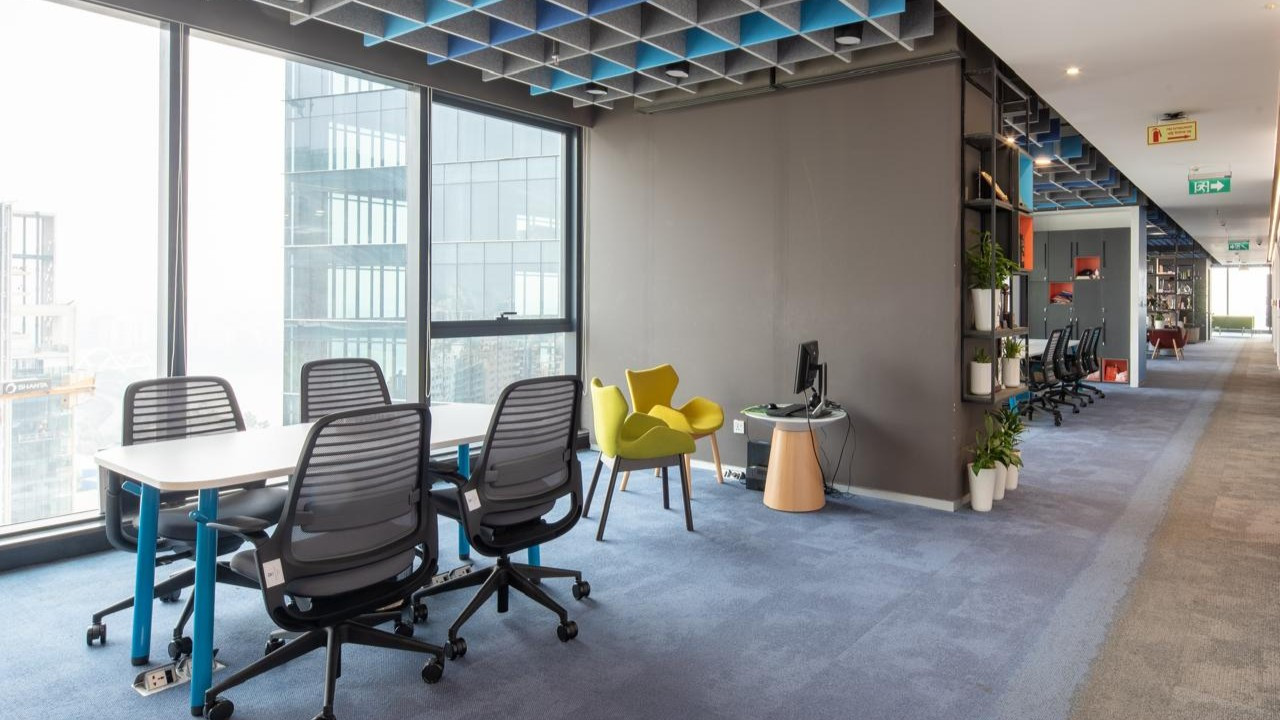
Sensor-operated water taps reduce water consumption while maintaining hygiene standards. Air-conditioning systems operate within fixed thermal ranges and are switched off outside office hours to avoid wasteful consumption.
Together, those changes reduced electricity consumption by 16% between 2024 and 2025, exceeding the organisation's original target.
In Bangladesh, where electricity shortages and rising energy demand remain national concerns, such operational discipline carries significance beyond a single office building.
But the company's approach extends beyond infrastructure alone.
Regular internal communication campaigns encourage employees to adopt energy-saving habits and digital working processes.
The organisation has also set an internal target to reduce paper use by up to 2% by 2026. Facilities management teams responsible for sustainability targets recently received special recognition from the company's chairman and managing director – a signal that environmental performance is being treated as a strategic priority rather than a peripheral initiative.
The building also includes a medical centre, gymnasium and staff nursery — part of an effort to frame sustainability not only in environmental terms, but also in relation to long-term employee wellbeing.
That broader definition of sustainability may ultimately be the company's most important argument.
At both the Kalurghat factory and the Dhaka corporate office, Unilever Bangladesh appears to be moving away from the idea of sustainability as a separate corporate initiative.
Instead, environmental responsibility is being embedded into systems of governance, infrastructure, employee behaviour and operational decision-making.
The implications extend beyond one company.
Bangladesh's future industrial growth will unfold under intensifying climate pressure. Factories will face greater energy uncertainty. Cities like Dhaka will confront worsening heat and infrastructure strain.
Water management will become more politically and economically sensitive. Under those conditions, corporations operating at scale will increasingly be judged not only by what they produce, but also by how they operate.
At Unilever Bangladesh, the answer emerging from both factory floor and corporate office is notably pragmatic: sustainability is not built through one dramatic announcement or a single green investment.
It is built through hundreds of repeated decisions – how energy is monitored, how water is reused, how offices consume electricity, how waste exits a facility, how employees behave, and how leadership chooses to measure accountability.
The process continues to evolve. It is also increasingly unavoidable.
And in Bangladesh's evolving industrial landscape, efforts to integrate sustainability into everyday operations are becoming increasingly significant beyond individual organisations themselves.


