Banking stocks see mixed reaction as new BB dividend curbs loom
The Bangladesh Bank has directed that commercial banks must maintain a minimum paid-up capital of Tk2,000 crore to declare any cash dividends

The banking sector on the Dhaka bourse yesterday experienced a mixed response from investors following the central bank's latest stringent directives on dividend distribution.
The Bangladesh Bank has directed that commercial banks must maintain a minimum paid-up capital of Tk2,000 crore to declare any cash dividends. The policy, aimed at strengthening the sector's capital base, is expected to significantly restrict cash payouts for most listed lenders.
Under the new framework, which is set to take effect from 31 December 2026, even banks meeting the capital threshold and other regulatory requirements will be allowed to pay a maximum of 50% of declared dividends in cash.
 Keep updated, follow The Business Standard's Google news channel
Market data shows an immediate impact: out of 36 listed banks, 12 declined, 14 remained unchanged, and five advanced as investors assessed the implications of the new directive
Currently, the room for cash dividend distribution appears extremely limited. Only BRAC Bank meets the Tk2,000 crore paid-up capital requirement while also being in a position to offer cash returns. Although National Bank has adequate capital, its elevated non-performing loan burden continues to constrain dividend eligibility under the new rules.
A senior analyst of a brokerage firm noted that banks below the Tk2,000 crore threshold will need to raise equity—either through rights issues or repeat public offerings—if they aim to comply with the requirement by 2026.
The market reaction was reflected in price movements across key players. NCC Bank led the decliners with a 2.67% fall, followed by Dutch-Bangla Bank down 2.01% and Dhaka Bank slipping 1.77%.
Other notable losers included Eastern Bank, NRB Commercial Bank, and Southeast Bank, all declining more than 1%.
On the gainers' side, ICB Islamic Bank surged 3.85%, while One Bank and BRAC Bank rose 2.67% and 1.05% respectively.
Trading in five other listed banks remained suspended due to ongoing merger proceedings involving Sammilito Islami Bank.
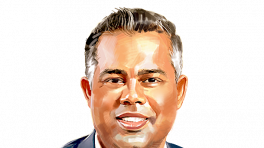
Commenting on the policy shift, Mashrur Arefin, managing director and CEO of City Bank, said the regulation may help prevent weaker banks from eroding capital through excessive cash payouts, but warned that a blanket approach could be counterproductive.
He argued that treating strong and weak banks alike could weaken investor confidence in well-managed institutions.
Instead, Mashrur Arefin suggested using the Capital Adequacy Ratio (CAR) as a more effective benchmark, noting that banks maintaining CAR levels of 17–18%, well above the 12.5% regulatory minimum, should have greater flexibility in rewarding shareholders.
Market analysts echoed similar concerns, suggesting that a more sophisticated approach would involve linking dividend approvals to a bank's broader financial health indicators rather than just a fixed capital amount.
While they acknowledged the move as a step toward long-term financial stability, they cautioned that restricting cash dividends from otherwise strong banks could reduce the sector's appeal to institutional investors.