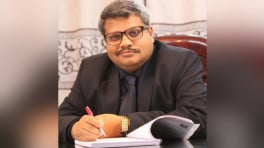
High-level leadership crucial at COP, says fisheries adviser

Fisheries and Livestock Adviser Farida Akhtar said the participation of high-level leadership at the United Nations Global Climate Conference (COP) is crucial for Bangladesh to effectively highlight its position and importance on the global stage.
She said the level of attention and importance a country receives in the presence of the Prime Minister or members of the Advisory Council cannot be achieved through lower-level representation. "Therefore, the active participation of high-level leadership in COP is essential," she said.
The adviser made the remarks while speaking as chief guest at a debriefing workshop following Bangladesh's participation in the United Nations Climate Change Conference 2025 (COP30). The workshop was organised by the Ministry of Fisheries and Livestock and held at the Cotton Development Board on Wednesday morning.
 Keep updated, follow The Business Standard's Google news channel
Farida Akhtar said Bangladesh is rich in biodiversity and, despite facing multiple challenges, has the capacity to address them. "If we can collectively take initiatives, it will be possible to significantly reduce the potential damage caused by climate change," she said.
Referring to the livestock sector, she said farmers often prefer foreign breeds to increase production, but indigenous breeds are more suitable for adapting to climate change. She said foreign breeds require higher levels of service, care, and management compared to indigenous breeds. "Foreign breeds should not be imported solely to increase production. Preserving and developing indigenous breeds must be prioritised," she added.
The adviser also stressed the importance of building a skilled pool of experts in Bangladesh, noting that a group of young people is already actively engaged in climate-related work. She said the impacts of genetically modified organisms (GMOs) on fisheries and livestock must be given due attention, adding that equal importance should be placed on technology as well as people's knowledge and experience.
The workshop was chaired by Abu Taher Muhammad Jaber, Secretary of the Ministry of Fisheries and Livestock. Dr Farhina Ahmed, Secretary of the Ministry of Environment, Forest and Climate Change, attended as special guest.
Dr Farhina Ahmed stated that the government aims to work jointly with public and private expertise to address climate change. She stated that Bangladesh must continue climate actions even without COP funding, adding that the government is allocating US$3.5 million from its own resources to the climate sector. She also emphasised that climate-related decisions must be taken in consideration of national context.
Mohammad Navid Shafiullah, Additional Secretary of the Ministry of Environment, Forest and Climate Change, delivered the welcome address, while Dr Md Touhidul Islam, NDC, Ambassador of Bangladesh to Brazil, delivered a video message.
Keynote presentations were delivered by Mirza Shawkat Ali, Director of the Department of Environment; AKM Sohel, Executive Director of the Bangladesh Centre for Climate Justice; Mohammad Hafizul Islam Khan, Director of BARSIC and biodiversity researcher; Pavel Partha; and Sohanur Rahman, Executive Coordinator of YouthNet Global.
Panel discussions featured Gazi Md Wali-ul-Haq, Managing Director (Additional Secretary) of the Bangladesh Climate Change Trust; Dr Fazle Rabbi Sadeq Ahmed, Deputy Managing Director of PKSF; and Mohammad Ziaul Haq, Additional Director General of the Department of Environment.
The open discussion was moderated by Dharitri Kumar Sarkar, Joint Secretary of the Ministry of Environment, Forest and Climate Change, while Shahina Ferdousi, Joint Secretary of the International Organisations and Cooperation Division of the Ministry of Fisheries and Livestock, served as moderator.
Senior officials from various ministries and departments, along with representatives from non-governmental organisations, attended the workshop.