



Verdict Thursday: What will happen if caretaker government returns?
Attorney General Md Asaduzzaman told TBS that the 2011 verdict should not stand, arguing it was 'written to favour a certain political party.'

The Appellate Division will deliver its verdict on Thursday (20 November) on whether the non-partisan caretaker government system for national elections will be reinstated.
The upcoming judgment follows multiple review petitions challenging the 2011 verdict that abolished the caretaker provision from the Constitution.

Lawyers involved in the case say that even if the Appellate Division restores the system, the upcoming 13th National Parliament Election, due by February, cannot be held under it due to constitutional limitations.
 Keep updated, follow The Business Standard's Google news channel
The 14th and the following polls could potentially be conducted under a reinstated caretaker system.
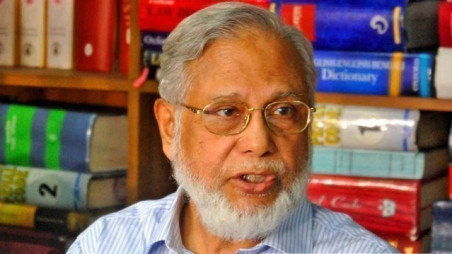
Sharif Bhuiyan, a lawyer representing one of the petitioners, told The Business Standard that reinstating the system now would not allow it to be applied to the imminent election.
"Under the Constitution, the caretaker government must be formed within 15 days of the dissolution of Parliament. Since Parliament was dissolved more than a year ago, the required process cannot be initiated," he said.
BNP lawyer Ruhul Kuddus Kazal and Jamaat lawyer Shishir Manir expressed the same position.
Advocate Sharif Bhuiyan said the court may provide a clarification to avoid misinterpretation.
"Otherwise, various interpretations of the verdict may emerge, creating instability. Even if the court does not explain it, the interpretation remains the same: the upcoming election cannot be held under the caretaker system," he said.
He added that some issues raised during arguments—such as whether Justice Khairul Haque delivered his verdict after retirement—do not require resolution at this stage.
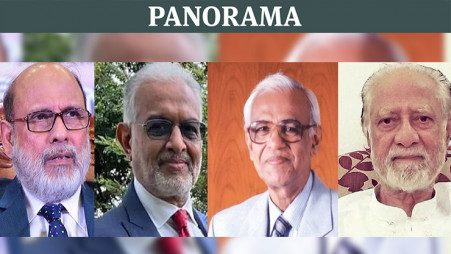
BNP lawyer Kazal said he also argued before the court that the caretaker system could only take effect from the next election after the upcoming one.
Jamaat lawyer Shishir Manir said that even if the caretaker government system returns, "the February election will be held under the current interim government."
He said the constitutional mechanism needed to form a caretaker administration—particularly the requirement for dissolution of Parliament—no longer exists.
He noted that the interim government now in place has three mandates: justice, reform and election. The poll will be held under that framework. Only after a new Parliament is formed can the restored system, or a revised model based on the July Charter, be operationalised.
How the caretaker debate reached the court again
The caretaker government system was introduced in 1996 through the Thirteenth Amendment during the BNP government, following opposition movements led by the Awami League.
In 1998, three lawyers, including M Salimullah, challenged the amendment in the High Court. The petition was dismissed in 2004, and the petitioners appealed in 2005.
After two years of caretaker rule during the 2006–2008 political crisis, questions were raised about the system's weaknesses.
When the Awami League returned to power, the Appellate Division began hearing the appeal on 1 March 2010.
Eight senior lawyers appeared as amici curiae, arguing in favour of retaining the system, while then Attorney General Mahbubey Alam also supported it.
On 10 May 2011, the Appellate Division, by majority, declared the Thirteenth Amendment void.
Before the full verdict was released, Parliament passed the Fifteenth Amendment on 30 June 2011, abolishing the caretaker system. It received presidential assent on 3 July.
Former chief justice ABM Khairul Haque subsequently declared the caretaker system unconstitutional.
Following the political shift on 5 August last year, several review petitions were filed seeking reconsideration of the 2011 verdict.

On 27 August 2024, one was submitted by prominent citizens Badiul Alam Majumder, Tofail Ahmed, M Hafizuddin Khan, Jobairul Haque Bhuiyan and Zahra Rahman.
On 16 October 2024, BNP Secretary General Mirza Fakhrul Islam Alamgir filed another.
Jamaat-e-Islami Secretary General Mia Golam Porwar filed a third on 23 October the same year.
A freedom fighter from Naogaon, Mofazzal Hossain, submitted a separate application.
After hearing these pleas together, the Appellate Division decided to rehear the original appeal against the High Court verdict.
Lawyers Sharif Bhuiyan, Barrister Ruhul Kuddus Kazal, Barrister Zainul Abedin, and Advocate Mohammad Shishir Manir represented the petitioners.
The final hearing concluded on 11 November, and the Appellate Bench led by Chief Justice Syed Refaat Ahmed set 20 November for the verdict.
After hearing these matters together, the Appellate Division ordered a fresh appeal hearing.
Separately, on 17 December last year, a High Court Bench of Justices Farah Mahbub and Debasish Roy Chowdhury declared Sections 20 and 21 of the Fifteenth Amendment — which abolished the caretaker system — inconsistent with the Constitution, reopening the path for its return.
Attorney General Md Asaduzzaman told TBS that the 2011 verdict should not stand, arguing it was "written to favour a certain political party."
He added that introducing the caretaker system for the government succeeding the current one would not violate the law.


