Speaker, deputy speaker elected: What powers do they hold?
In practice, individuals nominated by the ruling party are usually elected to these positions, although any Member of Parliament can theoretically contest the post

After a new Parliament is formed, it is mandatory to elect a Speaker and a Deputy Speaker at the first sitting. Article 74(1) of the Constitution states:
"At the first sitting of Parliament after a general election, Parliament shall elect from among its members a Speaker and a Deputy Speaker. If either of these offices becomes vacant, Parliament shall elect another member to fill the vacancy within seven days, or if Parliament is not in session during that period, at the next sitting."
In practice, individuals nominated by the ruling party are usually elected to these positions, although any Member of Parliament can theoretically contest the post.
 Keep updated, follow The Business Standard's Google news channel
When does the Speaker act as President?
According to Article 54 of the Constitution, the Speaker shall act as President if the office of the President becomes vacant due to death, resignation or removal, or if the President is unable to discharge duties due to absence, illness or other reasons. In such situations, the Speaker performs the functions of the President until a newly elected President assumes office or the President resumes duties.
Can a Speaker remain an MP or minister after election?
According to the Constitution, they remain Members of Parliament but cannot remain ministers.
To become Speaker or Deputy Speaker, a person must first be an elected Member of Parliament. Therefore, the individual continues to hold the position of MP while serving as Speaker. However, to maintain neutrality, the Speaker does not participate in debates like other MPs.
A person cannot simultaneously serve as Speaker and minister. According to Article 147(3) of the Constitution, a person holding a constitutional office such as Speaker or Deputy Speaker cannot hold any office of profit or executive position, including ministerial responsibilities.
Article 74(2) of the Constitution clearly states that the office of Speaker or Deputy Speaker will become vacant if the person ceases to be a Member of Parliament or accepts the office of a minister.
This means that if a sitting Speaker is appointed as a minister, the Speaker's position will automatically become vacant.
Powers and responsibilities of Speaker
The Speaker holds extensive authority in conducting parliamentary business. The Speaker acts as the chief spokesperson of Parliament and ensures discipline during parliamentary sessions.
One of the Speaker's main responsibilities is to conduct, adjourn or preside over parliamentary sittings following the direction of the President.
Normally, the Speaker does not vote. However, if the votes of the government and opposition sides are equal on an issue, the Speaker may cast a deciding vote.
Article 75(1)(b) of the Constitution states: "Decisions in Parliament shall be taken by a majority of votes of the members present and voting, but the person presiding shall not vote except when the votes are equal, in which case he or she shall exercise a casting vote."
The Speaker does not speak on behalf of any political party. Within Parliament, the Speaker's decision is considered final, reflecting the expectation of neutrality.
Another unique feature of the position is that the Speaker continues in office even after Parliament is dissolved.
Article 74(6) of the Constitution states that the Speaker or Deputy Speaker shall continue in office until his or her successor enters upon office.
This means that even during the period between elections, when Parliament does not exist, the Speaker remains in office and presides over the first sitting of the newly elected Parliament.
According to the Constitution, the Speaker and Deputy Speaker represent the balance and neutrality of Parliament. Although they are elected MPs, once they assume the Speaker's chair they are expected to rise above party identity and perform their duties as guardians of the legislature.
Speaker, deputy speaker elected: Who are they?
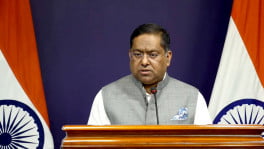
Hafiz Uddin Ahmed was elected the Speaker of Parliament and Barrister Kayser Kamal as the Deputy Speaker today (12 March).
Following their elections, the Parliament session was adjourned for a few minutes. The new Speaker and Deputy Speaker later took their oaths, administered by President Mohammad Shahabuddin.
Hafiz Uddin Ahmed
Prior to his appointment as Speaker, Hafiz Uddin Ahmed was serving as the Liberation War affairs minister but resigned from the post yesterday (11 March), confirmed Md Akbar Hossain, assistant private secretary to the minister.
A six term lawmaker, Hafiz was first elected to Parliament in 1986 from Bhola as a candidate of the Jatiya Party and was re elected in 1988. He later won the fifth parliamentary election as an independent candidate.
After joining the Bangladesh Nationalist Party, he was elected to Parliament for three consecutive terms up to the eighth Parliament in 2001.
During the previous BNP led government, he served as minister of water resources and later as commerce minister following a cabinet reshuffle.
A retired major of the Bangladesh Army, Hafiz Uddin Ahmed became a member of the BNP standing committee in 2024.
Kayser Kamal
Barrister Kayser Kamal has been elected as the Deputy Speaker of Parliament.
Kayser Kamal had been serving as the state minister for the Ministry of Land but resigned prior to his appointment as Deputy Speaker.
He was elected from the Netrokona 1 constituency (Kalamkanda Durgapur) in the 13th national parliamentary election as a candidate of the Bangladesh Nationalist Party. He is serving as a Member of Parliament for the first time.