BNP raises allegations of irregularities in postal ballot process
“The Election Commission and the Ministry of Foreign Affairs must provide clear explanations on these issues,” he added

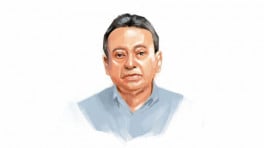
BNP Standing Committee member Salahuddin Ahmed alleged irregularities in the preparation, dispatch, and use of postal ballots, saying the issue has raised serious questions about the transparency of the electoral process.
"We have sought a clear explanation," he said.
Salahuddin made the remarks while speaking to journalists after a meeting with the Election Commission (EC) secretary at the Election Commission building in Agargaon, Dhaka, today (15 January).
 Keep updated, follow The Business Standard's Google news channel
He said the meeting discussed several legal aspects of the election and the code of conduct. Referring to videos and images circulating on social media, Salahuddin claimed that in some cases, between 200 and 300 ballots were found in individual houses.
"In some places, ballots have been seized; in others, there are allegations that voting has already begun. There are also instances where ballots sent in the name of one person are being received by someone else," he said.
He further said questions remain over the process through which ballots were sent to expatriates, how they would cast their votes, where the ballots would be scanned, and who would be held responsible if a large number of ballots were found in a single location.
"The Election Commission and the Ministry of Foreign Affairs must provide clear explanations on these issues," he added.
According to Salahuddin, the Election Commission informed them that it would review the issues and provide explanations, if necessary, even later in the day.
He also said a specific proposal had been placed regarding the postal ballot system.
"The same general ballot used in a constituency, containing the names and symbols of all contesting candidates, should also be used as the postal ballot for that constituency," he said. "This would eliminate the need to print separate symbol-specific ballots for different constituencies and would reduce complexity."