Bangladesh among countries least equipped to manage climate risks: report
Afghanistan and Bangladesh face the most significant challenges, recording the lowest climate readiness scores at 0.214 and 0.207.

Bangladesh is among the countries least equipped to manage climate risks despite being highly exposed to climate impacts, according to a new report highlighting stark disparities in climate vulnerability and financial readiness across the Hindu Kush Himalaya (HKH) region.
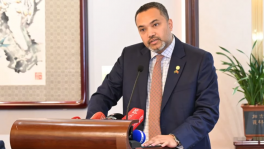
The report, titled Climate Finance Synthesis Report: Needs, Flows and Gaps in the Hindu Kush Himalaya Countries, was launched on Monday at the "Enhancing Climate Actions in the Hindu Kush Himalaya" conference held in Paro, Bhutan.
It finds that countries highly exposed to climate impacts — including Bangladesh, Bhutan, India, Myanmar, Nepal and Pakistan — have limited financial capacity to manage climate risks.
 Keep updated, follow The Business Standard's Google news channel
Afghanistan and Bangladesh face the most significant challenges, recording the lowest climate readiness scores at 0.214 and 0.207 respectively, alongside high vulnerability levels of 0.586 and 0.554. India, Nepal, Myanmar and Pakistan show moderate levels of readiness and vulnerability, reflecting a mixed capacity to address climate risks across the region.
The report underscores the urgent need for targeted interventions to enhance resilience in the most vulnerable countries.
According to the analysis, the Hindu Kush Himalaya — a critical water source for billions of people — faces a severe climate financing shortfall. Current financial commitments are insufficient to meet the region's adaptation and mitigation needs, with total climate finance requirements projected at USD 12.05 trillion by 2050.
"Mobilising the ambitious target of USD 12 trillion is like climbing the Everest of funding," said Ghulam Ali, innovative investment specialist and lead author of the report. "The strategy to mobilise these resources has to be creative, comprehensive and collective to achieve such significant goals."
The analysis, conducted by the International Centre for Integrated Mountain Development (ICIMOD), estimates that the annual climate finance requirement for the eight HKH countries stands at approximately USD 768.68 billion. China and India together account for 92.41% of the total projected requirement.
"Evidence and analysis are an important part of advocating and influencing policy development for climate financing in the region," said ICIMOD Director General Pema Gyamtsho. He added that the data presented in the report strengthens understanding of the actions required to address the region's financial needs and build economic resilience.
The report notes that the HKH region faces an adaptation burden far exceeding global averages, forcing countries such as Afghanistan, Nepal and Pakistan to spend disproportionately high amounts on disaster response and adaptation. This, it says, traps them in a cycle of recovery with limited resources for broader development.
Framing the crisis as an issue of economic inequality, the report highlights that annual per capita climate finance needs range from as low as USD 24 in some countries to more than USD 2,126 in others, representing between 6% and 57% of GDP.
To bridge the financing gap, the report recommends a three-track approach: improving access to existing multilateral climate funds, introducing innovative mechanisms such as debt-for-climate swaps, and increasing public spending for mountain regions and environmentally sensitive areas.
The Hindu Kush Himalaya region stretches over 3,500 kilometres across Asia and spans eight countries — Afghanistan, Bangladesh, Bhutan, China, India, Myanmar, Nepal and Pakistan.
The report estimates that the remaining HKH countries, excluding China and India, require USD 62.16 billion annually for climate finance. Bangladesh and Pakistan, in particular, face significant adaptation funding needs of USD 86 billion and USD 280 billion respectively.